The Ada Website Compliance Guide
for Interior Designers, Architects & Builders
Since graduating from Architecture school in 2010 in Southern California, I’ve designed well over 1200 websites for interior designers, architects, and builders all through the United States. Over the years, websites have become so ingrained into daily behavior that there are now laws that require your website be “Safe and Easy” to access. While it is extremely rare that you can get sued for a bad website, below are the most important things to know.
Easy to Read & Easy to Use
The number one thing to be aware of is that your website needs to be extremely simple to use, easy to understand, easy to read, and be as enjoyable as possible.
I’ve designed a lot of fancy, complicated and interesting websites, but the Viewer to your website will not enjoy visiting your website if it is hard to understand.
The words needs to be nice and large, easy to read. No fancy cursive fonts, smaller letters, or buttons that are hard to click.
The best Page NAmes to use
According to my own internal data, your clients are going to want to view these five pages the most: Home, Portfolio, About, Services & Contact. These page names needs to be easy to find, easy to click, large text, that is very clear and understandable. This is not just good for ADA Compliance but also to make it easier for your Clients to see your work, learn about you and your services, and contact you for more information.
No Fancy Animations or Hovering Effects
When I designed websites in 2010, I used Adobe Flash, which Steve Jobs essentially banned once the iPad came out. These fancy programs made a lot of cool designs, like animations, things flying around, and it was fun to design. But for your clients, it is not fun at all, it is frustrating. Your website should have minimal to no animations or unusual behaviors. The simpler and easier your website is, the better it will comply with ADA and the more likely your clients will enjoy using it and sharing it with their peers, family, friends, and co-workers.
No Cursive or Small Fonts
One of the most important aspects of ADA Compliance is easy-to-read text. This means that fancy cursive fonts don’t work. And super small text is also no good. Your website needs to easy to read, with large text, and a simple fonts that are either Sans Serif or an easy-to-read Serif font.
Minimal slide shows
One of thing ADA compliances that is recommend is as little or now slideshows. The little arrows that let you click left or right to view a Portfolio Gallery. Ideally, a Project Gallery should show photos large and easy to view, with little-to-no clicking required other than moving from one page to the next.
Extra caution if you are in California
California design firms are at the most of risk of being sued, but really any company can get sued. While I personally have not had any clients get in trouble for this yet, that day may come, especially if you are in California where the risk of getting in trouble is higher, just as it is with ADA compliance for ramps, doors, and hallways in San Francisco.
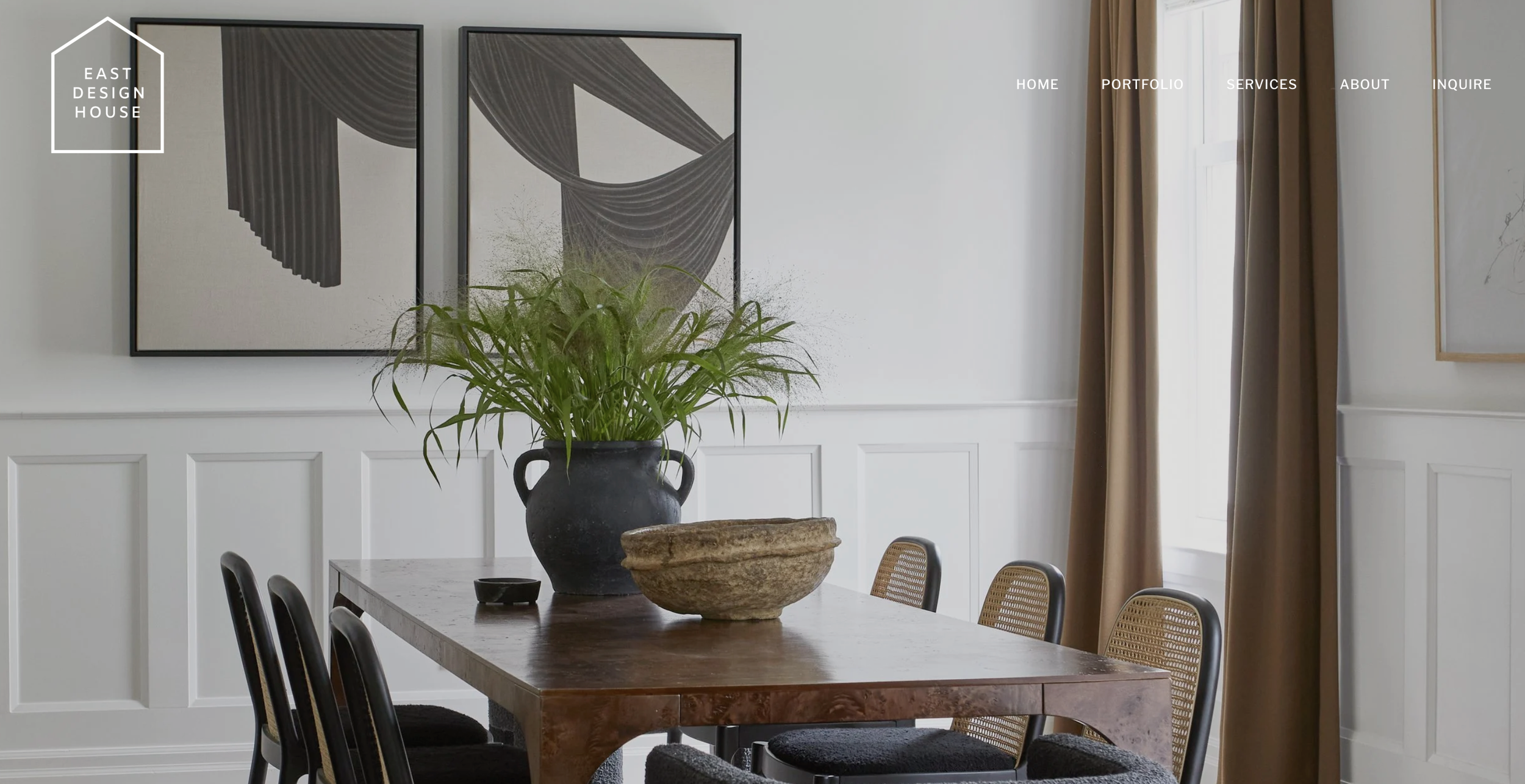
A good example of a website that is easy to navigate and read is East Design House, based in Toronto. You can view their website at www.eastdesignhouse.com